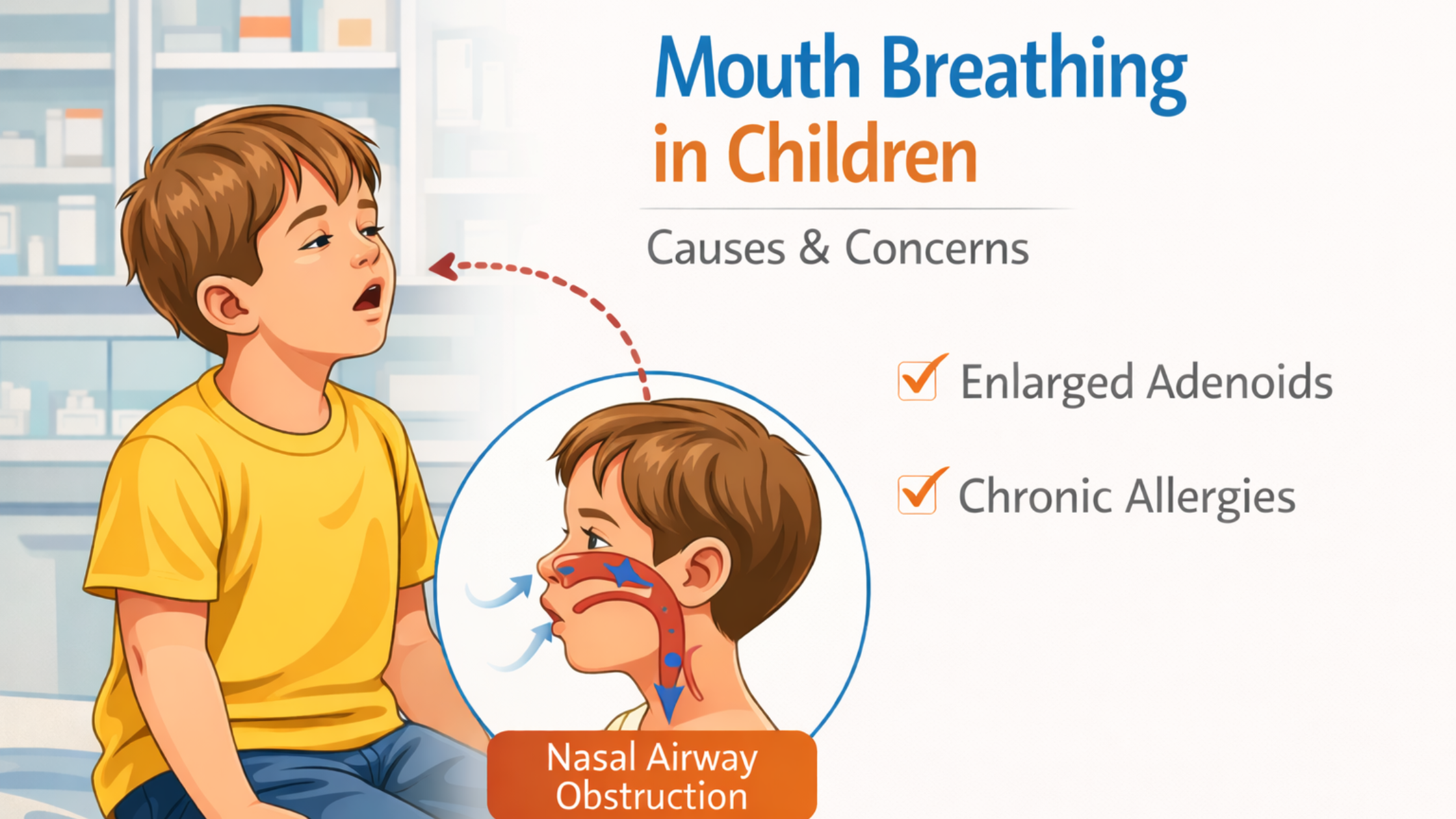
Why Children Breathe Through the Mouth: Causes & Concerns
Understanding the difference between normal behavior and a medical condition that requires professional attention
⏱️ 6 min read
The Challenge Parents Face
Many parents notice their children breathing through their mouths instead of their noses, especially during sleep. While some might dismiss it as a simple habit that will pass with age, the reality is more complex. This breathing pattern can indicate anything from a temporary behavioral quirk to a significant physiological issue requiring professional intervention.
One of the most common culprits behind persistent mouth breathing in young patients is lymphoid tissue enlargement—a condition that demands timely diagnosis and treatment.
The Role of Lymphoid Tissue in Your Child’s Health
Lymphoid tissue sits behind the nasal cavity and plays a crucial role in immune defense during childhood years. This tissue naturally helps filter pathogens and support immune function. However, when it becomes enlarged—often due to repeated infections, allergies, or environmental irritants—it can obstruct airflow through the nose.
Common triggers for tissue enlargement include: frequent upper respiratory infections, seasonal or environmental allergies, exposure to smoke or pollution, and prolonged dust exposure.
Distinguishing Between Habit and Medical Condition
Not every instance of open-mouth breathing indicates a problem. The key lies in understanding frequency, duration, and associated symptoms.
| Occasional Breathing | Persistent Condition |
|---|---|
| Occurs during active play or excitement | Present even at rest and during sleep |
| No impact on sleep quality | Disrupted sleep, snoring, or witnessed pauses |
| Resolves with awareness and practice | Persistent despite behavioral correction |
| No associated speech or developmental delays | Speech changes, poor concentration, or learning difficulties |
⚠️ Red Flags Parents Should Monitor
- Regular snoring during nighttime sleep
- Chronic mouth breathing during day and night
- Restless sleep or frequent nighttime awakenings
- Nasal congestion that doesn’t resolve with treatments
- Changes in facial structure (long face, open bite)
- Daytime tiredness or hyperactivity
- Poor academic performance or attention span
- Speech problems like nasal-sounding voice
👉 If your child shows one or more of these signs consistently, it is advisable to consult an experienced ENT specialist for proper evaluation and timely treatment.
Why Timely Intervention is Critical
Delaying professional evaluation can lead to cascading health complications:
Sleep-Related Issues
Obstructive episodes during sleep can reduce oxygen levels, affecting brain development and daytime functioning.
Growth & Development
Chronic airway obstruction can affect nutrition, growth patterns, and overall physical development.
Speech & Language
Nasal obstruction influences proper pronunciation and language development patterns.
Dental Health
Prolonged mouth breathing dries oral tissues and can lead to bite problems and dental issues.
When to Seek Professional Assessment
If your child shows persistent symptoms such as chronic mouth breathing, snoring, or disturbed sleep, it is important to consult an experienced ENT specialist for accurate diagnosis and timely intervention.
A proper evaluation begins with clinical examination and may include specialized diagnostic procedures:
- Physical Examination: Assessment of nasal airflow and visualization of nasal structures
- Endoscopic Visualization: Direct visualization of enlarged tissue using specialized instruments
- Sleep Assessment: Evaluation of sleep patterns and any breathing disruptions
- Allergy Evaluation: Testing to identify potential allergic triggers
Treatment Approaches Available
Conservative Management
Initially, allergy management and medications may provide relief. Addressing underlying allergies, environmental triggers, and using appropriate nasal care can sometimes resolve symptoms without further intervention.
Surgical Solutions
When conservative approaches don’t provide sufficient relief and symptoms significantly impact quality of life, surgical intervention becomes necessary. Modern surgical techniques offer precision removal with minimal complications:
Microdebrider Technology: This advanced approach uses precision instruments for controlled tissue removal, resulting in less bleeding, reduced post-operative discomfort, and faster recovery compared to traditional methods. Endoscopic guidance during surgery ensures complete removal and reduces recurrence risk.
Recovery Timeline
Most children resume normal activities within 1-2 weeks post-procedure. Complete healing typically occurs within 3-4 weeks. Your specialist will provide specific post-operative care guidelines tailored to your child’s needs.
Many families report dramatic improvements in sleep quality, behavior, and academic performance following appropriate intervention.
Your Child Deserves a Full Breath
If you’ve noticed persistent mouth breathing, snoring, or sleep disturbances in your child, timely evaluation is essential to prevent long-term complications and ensure healthy development.
Ready to Schedule Your ENT Consultation?
Don’t let breathing issues affect your child’s sleep, growth, and overall well-being. Book an appointment with our expert specialists today.
ENT For All | Dr. Sushant Joshi | Advanced ENT Care Solutions
Frequently Asked Questions
Q: At what age should surgery be considered?
A: Most specialists recommend waiting until age 4-5, though individual cases vary. Evaluation determines the appropriate timing for your child.
Q: Can the condition return after treatment?
A: Recurrence is uncommon with complete removal using endoscopic-guided techniques. Your specialist can provide specific recurrence rates for your child’s situation.
Q: How long does recovery typically take?
A: Most children return to normal activities within 1-2 weeks, with complete healing in 3-4 weeks. Activities should be gradually resumed under professional guidance.